
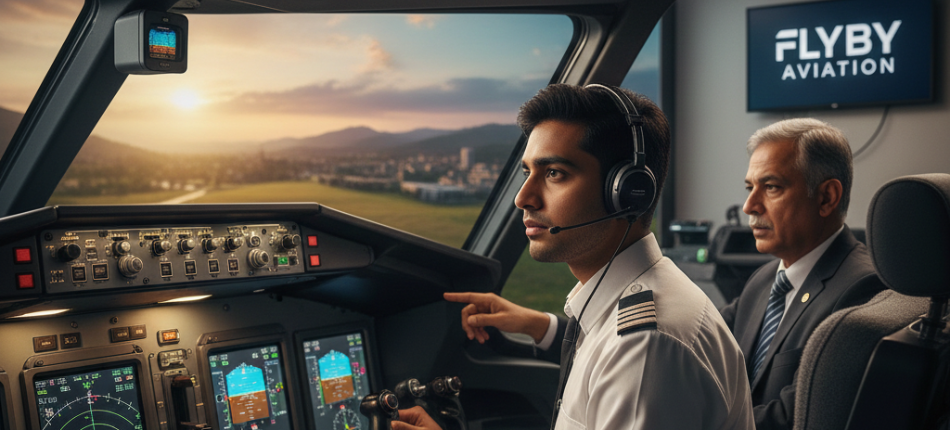
Commercial Pilot Training Academy – FlyBy Aviation – Build a Successful Aviation Career
Introduction
Becoming a commercial pilot is a dream career for many aviation enthusiasts. With high earning potential, global opportunities, and an exciting lifestyle, aviation continues to attract young aspirants. Enrolling in a professional Commercial Pilot Training Academy is the most important step toward earning a Commercial Pilot License (CPL) and starting a successful aviation career.
What Is a Commercial Pilot Training Academy?
A commercial pilot training academy is a DGCA-approved aviation institute that provides theoretical knowledge and practical flight training required to obtain a Commercial Pilot License. These academies follow strict aviation standards and train students using modern aircraft, simulators, and experienced instructors.
Importance of Professional Pilot Training
Commercial pilots are responsible for passenger safety and aircraft operation. Professional training ensures:
-
High safety standards
-
Strong technical and decision-making skills
-
Confidence in handling real-time flying situations
-
Compliance with aviation regulations
Training from a recognized academy prepares students for real-world aviation challenges.
Commercial Pilot License (CPL) Training Overview
CPL training is designed to prepare students for airline and commercial aviation roles. The training includes:
-
Ground school (theoretical subjects)
-
Flight training hours on single-engine and multi-engine aircraft
-
Simulator training
-
Navigation and cross-country flying
-
Night flying and emergency procedures
This structured training ensures students meet all regulatory and airline requirements.
Eligibility Criteria for Commercial Pilot Training
Most commercial pilot training academies require:
-
Minimum qualification: 10+2 with Physics and Mathematics
-
Minimum age: As per DGCA guidelines
-
Class 1 medical fitness certificate
-
Good English communication skills
Eligibility may vary slightly depending on the country and academy.
Training Modules Offered by Commercial Pilot Training Academies
Commercial Pilot Training Academies provide structured and comprehensive training programs designed to meet aviation authority standards and airline requirements. These modules focus on building strong theoretical knowledge, practical flying skills, and professional competence.
1. Ground School Training
Ground school forms the foundation of commercial pilot training. It covers essential theoretical subjects required for obtaining a Commercial Pilot License (CPL), including:
-
Air Regulations
-
Aviation Meteorology
-
Air Navigation
-
Aircraft Technical Knowledge
-
Flight Planning and Performance
This training ensures a deep understanding of aviation concepts and regulations.
2. Flight Training (Practical Flying Hours)
Practical flight training is the core of the program. Students complete required flying hours under the supervision of certified flight instructors. Training includes:
-
Dual and solo flying
-
Take-offs and landings
-
Cross-country navigation flights
-
Emergency handling procedures
-
Night flying operations
Hands-on flying experience builds confidence and technical expertise.
3. Simulator Training
Simulator sessions help students practice real-life flying scenarios in a controlled environment. This module includes:
-
Instrument flying practice
-
Emergency and abnormal procedures
-
Weather-based flying simulations
-
Cockpit coordination and procedures
Simulator training enhances decision-making and safety awareness.
4. Instrument Rating (IR) Training
Instrument Rating training allows pilots to fly using cockpit instruments under low visibility conditions. This module focuses on:
-
Instrument flight rules (IFR)
-
Precision and non-precision approaches
-
Navigation using instruments
-
Instrument emergency procedures
IR training is essential for airline operations.
5. Multi-Engine Training
Multi-engine training prepares pilots to operate aircraft with more than one engine. It includes:
-
Multi-engine aircraft systems
-
Engine failure procedures
-
Performance and control techniques
-
Advanced flight handling skills
This module is crucial for airline and commercial flying.
6. Aviation Safety and Emergency Procedures
Safety training ensures pilots are prepared for unexpected situations. This module covers:
-
Emergency evacuations
-
Fire fighting techniques
-
Survival training
-
Crew resource management (CRM)
Safety awareness is a top priority in commercial aviation.
7. Radio Telephony (RTR) Training
This module focuses on aviation communication skills. Training includes:
-
Standard aviation phraseology
-
ATC communication procedures
-
Radio telephony regulations
-
Mock communication sessions
Clear communication is essential for safe and efficient flying.
8. Airline Preparation and Interview Training
Many commercial pilot training academies provide career-oriented support, including:
-
Airline interview preparation
-
Technical and HR mock interviews
-
Resume building
-
Airline assessment guidance
This module helps students transition smoothly into airline careers.
Benefits of Enrolling in a Commercial Pilot Training Academy
-
One-to-one flight instruction
-
Standardized training procedures
-
Advanced simulators and aircraft
-
Airline interview preparation
-
Career guidance and mentorship
Such training improves skill development and job readiness.
Why Choose a Professional Commercial Pilot Training Academy?
A reputed training academy offers:
-
DGCA-approved curriculum
-
Experienced flight instructors
-
Modern aircraft and simulators
-
Structured flight schedules
-
Airline-oriented training modules
Professional training significantly increases a student’s chances of airline selection.
Future Scope of Commercial Pilot Career
A commercial pilot enjoys:
-
Attractive salary packages
-
International career opportunities
-
Professional growth and upgrades
-
Prestige and job satisfaction
With continuous expansion in aviation, the demand for trained pilots remains strong.
Conclusion
Joining a professional Commercial Pilot Training Academy is the foundation of a successful aviation career. With structured training, expert guidance, and real flight experience, aspiring pilots can confidently take off toward a rewarding future.
Commercial Pilot Training Academy Commercial Pilot Training Academy Commercial Pilot Training Academy Commercial Pilot Training Academy Commercial Pilot Training Academy Commercial Pilot Training Academy Commercial Pilot Training Academy