
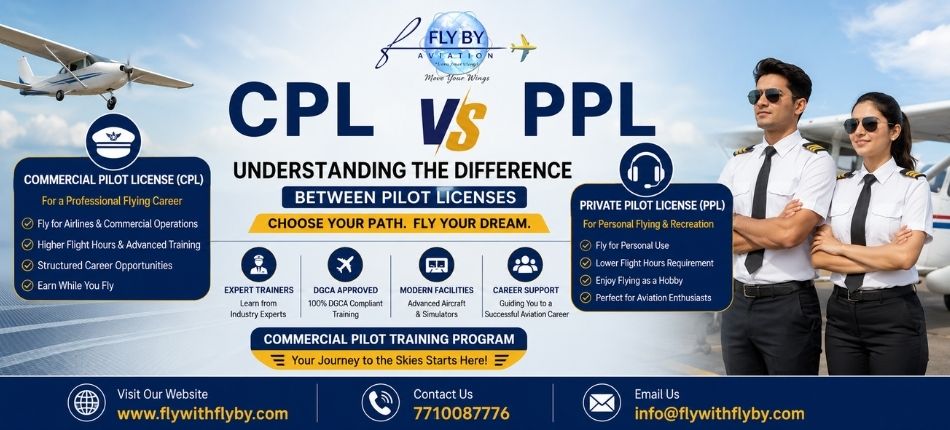
CPL vs PPL: Understanding the Difference Between Pilot Licenses | Commercial Pilot Training Program – FlyBy Aviation
Choosing the right pilot license is one of the first and most important decisions for aspiring aviators. Many students entering the aviation industry often come across two common terms: PPL (Private Pilot License) and CPL (Commercial Pilot License). While both licenses allow individuals to fly aircraft, their purpose, privileges, and career opportunities are significantly different. Understanding these differences is essential before enrolling in any Commercial Pilot Training program.
What is a Private Pilot License (PPL)?
A Private Pilot License (PPL) is designed for individuals who want to fly aircraft for personal and recreational purposes. A PPL holder can operate an aircraft and carry passengers; however, they cannot receive compensation or payment for flying services. This license is ideal for aviation enthusiasts who wish to experience the joy of flying without pursuing it as a professional career.
The training for a PPL generally includes ground school subjects, flight training, navigation, meteorology, aviation regulations, and basic aircraft operations. The required flying hours are significantly lower compared to a Commercial Pilot License.
What is a Commercial Pilot License (CPL)?
A Commercial Pilot License (CPL) is intended for individuals who want to build a professional career in aviation. CPL holders can legally work as pilots and receive compensation for flying. Commercial Pilot License Training is much more comprehensive and focuses on advanced flying skills, operational procedures, flight planning, safety management, and professional aviation standards.
After obtaining a CPL, pilots can pursue careers with airlines, charter companies, cargo operators, flight training organizations, and various aviation sectors.
Major Differences Between CPL and PPL
Purpose of the License
The primary difference between a Private Pilot License (PPL) and a Commercial Pilot License (CPL) lies in their purpose. A PPL is designed for individuals who wish to fly aircraft for personal use, recreation, or as a hobby. It allows aviation enthusiasts to enjoy the experience of flying without pursuing it as a profession. In contrast, a CPL is intended for individuals who want to build a career in aviation. It provides the legal authorization required to work as a professional pilot and earn compensation for flying services.
Flying Privileges
The flying privileges offered by PPL and CPL are significantly different. A PPL holder can operate an aircraft and carry passengers for personal travel, but cannot receive payment or financial benefits for flying. On the other hand, a CPL holder enjoys broader flying privileges and can work for airlines, charter operators, cargo companies, and other aviation organizations. A Commercial Pilot License allows pilots to conduct commercial flight operations and receive compensation for their services.
Flight Training Requirements
The training requirements for a CPL are much more extensive than those for a PPL. Private Pilot License training focuses on basic flight operations, aircraft handling, navigation, communication procedures, and aviation fundamentals. Commercial Pilot License training includes advanced flight maneuvers, instrument flying, cross-country navigation, emergency procedures, aviation regulations, and professional operational standards. Additionally, CPL candidates are required to complete significantly more flight hours and practical training before obtaining their license.
Career Opportunities
Career opportunities are one of the most important factors when comparing CPL and PPL. A PPL is generally suitable for recreational pilots and offers limited professional opportunities. In contrast, a CPL opens doors to a wide range of aviation careers, including airline pilot, charter pilot, cargo pilot, corporate pilot, flight instructor, aerial survey pilot, and other specialized aviation roles. For students aspiring to work in the aviation industry, obtaining a CPL is essential for long-term career growth and professional success.
Medical and Examination Standards
The medical and examination requirements for a CPL are more rigorous than those for a PPL. Commercial pilots are responsible for passenger safety and commercial flight operations, making strict medical fitness standards necessary. CPL candidates must pass comprehensive aviation medical examinations and advanced theoretical and practical tests that assess their flying skills, aviation knowledge, decision-making abilities, and operational competence. While PPL holders also need medical certification, the standards and examination requirements are generally less demanding compared to those for Commercial Pilot License holders.
Which License Should You Choose?
The choice between a Private Pilot License (PPL) and a Commercial Pilot License (CPL) depends entirely on your aviation goals. If you are passionate about flying and wish to operate an aircraft for personal travel, recreation, or as a hobby, a PPL may be the right option for you. However, if your dream is to become an airline pilot, work for charter companies, fly cargo aircraft, or build a long-term career in the aviation industry, pursuing a CPL is essential. A Commercial Pilot License provides the qualifications, advanced training, and professional opportunities required to earn a living as a pilot. Students who aspire to work in the aviation sector should consider enrolling in a reputable Commercial Pilot Training Institute to begin their journey toward a successful flying career.
Why Choose FlyBy Aviation?
FlyBy Aviation is committed to helping aspiring pilots achieve their aviation goals through comprehensive and industry-focused training programs. As a trusted Commercial Pilot Training Institute, FlyBy Aviation offers expert guidance, experienced instructors, DGCA-oriented ground classes, and a structured learning environment designed to prepare students for professional aviation careers. Our training programs focus on building strong theoretical knowledge, practical flying skills, and confidence required to succeed in the competitive aviation industry. With personalized mentorship, modern training methodologies, and dedicated student support, FlyBy Aviation provides aspiring pilots with the foundation needed to excel in Commercial Pilot License training and pursue rewarding opportunities in aviation.
Conclusion
Both PPL and CPL serve different purposes in aviation. While a Private Pilot License is ideal for recreational flying, a Commercial Pilot License is essential for those seeking a professional career in aviation. Understanding the differences will help aspiring pilots make informed decisions and choose the right training path for their future.
Commercial Pilot Training Program Commercial Pilot Training Program Commercial Pilot Training Program Commercial Pilot Training Program Commercial Pilot Training Program Commercial Pilot Training Program Commercial Pilot Training Program Commercial Pilot Training Program Commercial Pilot Training Program